Self-Editing Your Novel vs. Hiring a Professional Editor
Should you self-edit or hire a professional editor for your novel?
Hiring a professional editor isn't for everyone, or every book.
Some writers polish their manuscripts into publication-ready shape entirely on their own. Others hand their book to an editor at the first draft stage and never look back. Most writers land somewhere in between — doing serious self-editing work first, then bringing in a professional for the parts they can't see clearly themselves.
But how do you know what's right for you?
In this article, I'll show you when self-editing your novel is ideal and when to start hiring a professional editor for your book.
When to Edit Your Novel Yourself
Self-editing makes sense in a few clear situations.
If this is your first full draft, self-editing isn't optional — it's the necessary first pass before anyone else should see the manuscript. A first draft is where you discover what your story actually is. No editor should be paying that discovery on your behalf.
Self-editing is also the right move if you're still building your craft. Working through your own manuscript line by line, noticing your habitual mistakes, and fixing them yourself teaches you far more than having someone else quietly fix them for you. Writers who skip this stage often keep making the same errors book after book, because they never learned to spot them.
And if your budget is tight right now, self-editing lets you get the manuscript as strong as possible before you spend a dollar. A cleaner draft also means a cheaper edit later, since most editors charge more for messier manuscripts that need heavier intervention.
The common thread: self-editing is ideal when you're building skill, protecting budget, or simply not ready to hand the book to someone else yet.
How to Edit Your Novel
Good self-editing happens in layers, not all at once.
Start with a big-picture pass. Read the whole manuscript with fresh eyes — ideally after setting it aside for a few weeks — and ask whether the plot holds together, whether the pacing drags or rushes, and whether every character earns their place in the story.
Next, move to a scene-level pass. Look at each scene individually: does it move the story forward, reveal character, or build tension? If a scene doesn't do at least one of these things, it may need to be cut or reworked.
Then comes the line-level pass, where you tighten sentences, cut filler words, vary your sentence rhythm, and make sure your prose sounds like you at your best. This is also where you hunt down overused words and crutch phrases.
Finally, do a proofreading pass for spelling, grammar, and formatting — but only after the bigger issues are resolved. There's no point polishing sentences you might cut in the next revision.
Reading your manuscript aloud, using text-to-speech software, or printing it out and marking it up by hand can all help you catch things your eyes glide past on screen.
Self-Editing Checklist
Before you consider your manuscript "editor-ready," run through a checklist like this one:
- Does the story have a clear beginning, middle, and end?
- Does every major character have a believable arc?
- Is the pacing consistent, without long stretches of stalled action?
- Have you eliminated plot holes and continuity errors?
- Does the point of view stay consistent throughout?
- Have you cut unnecessary scenes, subplots, and characters?
- Have you removed repetitive words, phrases, and tics?
- Is the dialogue natural and distinct for each character?
- Have you checked grammar, spelling, and punctuation?
- Have you read the manuscript aloud at least once?
If you can honestly check off most of this list, you're in strong shape — whether you plan to stop there or move on to professional editing next.
So How Do You Know When to Hire a Professional Editor?
There's a point where self-editing hits its limit, and every writer reaches it eventually.
You've likely gone as far as you can alone if you've revised the manuscript multiple times and stopped noticing new problems, if trusted beta readers keep flagging issues you can't quite diagnose or fix yourself, or if you're planning to publish — traditionally or independently — and need the manuscript to compete with professionally edited books on the market.
It's also worth hiring an editor if you simply can't get objective distance from your own work anymore. Every writer reaches a point where the manuscript is too familiar to see clearly; that's not a failure, it's just what happens after enough passes through the same pages.
If any of that sounds like where you are, it's time to bring in a professional.
How to Go About Hiring an Editor
Start by identifying what kind of edit you actually need.
A developmental edit addresses big-picture story issues. A line edit focuses on prose style and flow. A copyedit catches grammar, consistency, and technical errors. A proofread is the final polish before publication. Many manuscripts need more than one of these, usually in that order.
From there, research editors who specialize in your genre, since a thriller editor and a literary fiction editor bring different instincts to a manuscript. Ask for a sample edit — most professional editors offer one on a few pages, so you can see how they work before committing. And check references or reviews from other authors they've worked with.
A good editor should also be able to explain their process clearly and give you a realistic timeline and cost estimate up front.
The Cost of Hiring an Editor for a Book
Editing costs vary widely depending on the type of edit, the editor's experience, and the length of your manuscript.
Developmental edits tend to be the most expensive, since they require the deepest engagement with the story. Line edits and copyedits are typically priced per word or per page and are less costly than a full developmental pass. Proofreading is usually the least expensive, since it deals only with surface-level errors.
Rates can range from a few cents to well over a dollar per word, depending on these factors, so it's worth getting quotes from a few editors and comparing not just price but also what's actually included.
Want an Editor Now? Consider Me
If you've made it through your self-edits and you're ready for a professional set of eyes on your manuscript, I'd love to help.
Reach out and schedule a consultation with me.
You can also check out my writing coach or editing services and explore what the people I've worked with have said about their experience.
You May Also Be Interested In These Reads
 |  |  | 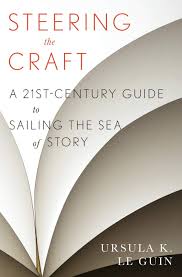 |
You can find more recommended reading on our Library page.
Disclosure: Each book recommendation contains affiliate links, but these are all books I highly recommend. I won’t include anything that I haven’t verified and personally found valuable.

You May Also Like