
Choosing Between Book or Film — Which One or Both?
If you’re considering writing your story idea as a novel instead of or before a screenplay, Jacqueline Haigh, Head of Scriptwriting at The London Ghostwriting Company, has some helpful advice.
The Differences Between Writing a Book and a Film
“To make a great film, you need three things: the script, the script, and the script.” Alfred Hitchcock knew the importance of a good screenplay and guided his writers through every draft.
In fact, the Master of Suspense was known for driving writers mad as he pushed to get the perfect blueprint he needed in order to tell a powerful story on the screen. This control freak knew how to get the job done.
All writing is notoriously difficult, and screenwriting possesses its own set of unique challenges.
English writer Nick Hornby said, “Once you get to a certain point in your novelistic career, unless you screw up very badly, the book is going to come out. With a screenplay, there are all these hurdles that seem to have some kind of objectivity to them. The screenplay has to work, and I love that.”
And that’s from a guy who knew a thing or two about creating books that did brilliantly on screen, like his memoir Fever Pitch and his novels High Fidelity and About A Boy.
Anyone who’s ever got as far as writing ‘The End’ on the last page of their final draft knows how it can feel like you’ve done a few rounds in the ring. Perhaps the reason for this is that screenplays are so ruthless about what you can and can’t include.
Alas, when you turn a novel into a screenplay, you usually have to cut a vast amount of plot. Unfortunately, this is also the ultimate way to enrage the book’s fans!
American writer and film producer Seth Grahame-Smith worked through this process whilst adapting his best-selling novel Abraham Lincoln: Vampire Hunter for the screen.
“If a novelist has created vivid characters, interesting relationships, settings the reader can easily imagine, and intriguing stories, a screenwriter has loads to work with,” he explains. “The challenge comes with deciding what to cut and what to keep.”
When adapting a book, one great technique is to look for the ending, then work backward from there and decide what you need to include to build to that ending.
In the words of American writer Joyce Carol Oates, who penned novels, plays, poetry and non-fiction, “The first sentence can’t be written until the final sentence is written.”
Structuring Your Book as a Screenplay
As a novelist, you can gain a lot by structuring your book as you would a screenplay. This will ensure it has a strong ensemble of memorable, active characters and a dynamic story with turning points and revelations, which keep the reader hooked until the end.
As Roald Dahl said, “I don’t care if a reader hates one of my stories, just as long as he finishes the book.”
Structuring a novel for screen may also make it a more obvious choice for representation by literary agents, especially if you’re working in commercial fiction.
Every author wants to see their book turned into a film, and if you write your novel in a film-friendly structure, the potential for adaptation will increase.
Writing a Book Instead of a Screenplay
However, it may also be wise for the screenwriters out there to consider writing novels too.
In 2023, around 30% of the total box office revenue came from films based on original screenplays, a significant decrease from the 70% of the 1980s. This shows a clear trend of box office success shifting away from original stories towards adapted material.
It’s estimated that adaptations can account for up to 50% of Hollywood films. Plus, these films often do very well at the box office and outperform other film types.
At The London Ghostwriting Company, when clients come to us with their story pitch, we always like
to look at how we can develop them for the publishing industry as a book but with adaptation potential. Novels provide an existing, often large, fanbase and a proven story, which helps attract audiences to the film adaptation.
Producers like to know that a story has worked in another form before committing the monumental time and expense required to make a film or TV show. A story previously written as a novel has already gone through development.
It’s like a process of distillation, where the true essence of the story becomes more concentrated. Every time the story is told, it becomes more and more itself.
Ironically, as Hitchcock said, a great film is all about the script, but we only notice the writing when the story is clumsy or ineffective.
When it works, the writer disappears, but the story lives forever.
Book or Film?
So, should you write your story as a novel or a screenplay?
The answer is, especially for first-time writers, write it as a book first. Go through the process of ensuring that your story works as a book: the first draft, redraft, editorials, revisions, and polish.
Once you’ve finished, develop your pitch and cover letter, build your agency shortlist, then start submissions.
The goal here is to hook a literary agent and, ideally, somebody who’s vested in selling film rights.
While it’s hard enough for a new author to secure representation by a literary agent, let alone for them to sell the project to a publisher, and beyond that, for the project to be acquired and adapted for film, it’s generally even harder for a new scriptwriter to sell their screenplay and have it produced into a film.
Stephen King said, “Books and movies are like apples and oranges. They both are fruit, but taste completely different.”
If you are both a novelist and a scriptwriter who can reimagine your project in this different form, that’s ideal. But if you really want your story to be made into a film, write it as a book first. Then perhaps, after it’s optioned, you will be hired to write your screenplay after all.
A Final Word From Brit: If you’re looking for more publishing advice, I can help. Grab tips from our free Resource Library or explore my editing and coaching services to learn more about how I help self-publishers go to market faster (and easier).
You May Also Be Interested In These Reads
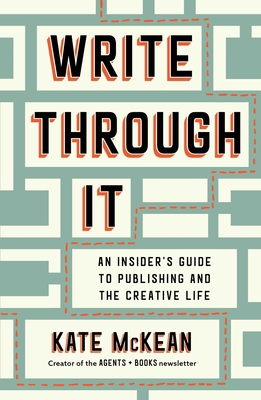 | 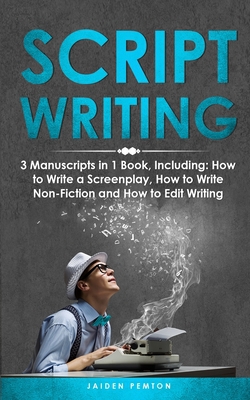 |  |  |
You can find more recommended reading on our Library page.
Disclosure: Each book recommendation contains affiliate links, but these are all books I highly recommend. I won’t include anything that I haven’t verified and personally found valuable.
Guest Blogger Bio
Jacqueline Haigh is a story consultant who heads up the Scriptwriting Division at The London Ghostwriting Company. With over 17 years as a professional writer and script doctor, Jacqueline occupies a leading role in advising and consulting on narrative structure across film, television, stage, radio, and all major literary projects.
Interested in writing a GUEST POST? Learn more about submitting to us: https://bewrit.com/write-for-us/.