I Spent Years Writing Alien Minds — Now I Edit With One
Why AI Won’t Replace Creative Minds
For most of the last decade, I made a living imagining how things that aren’t human might think.
The Singularity’s Children books are full of them. Minds that run faster than ours, minds smeared across multiple bodies, minds that woke up smarter than the people who built them. I spent 5 books trying to get inside heads that had no business resembling mine.
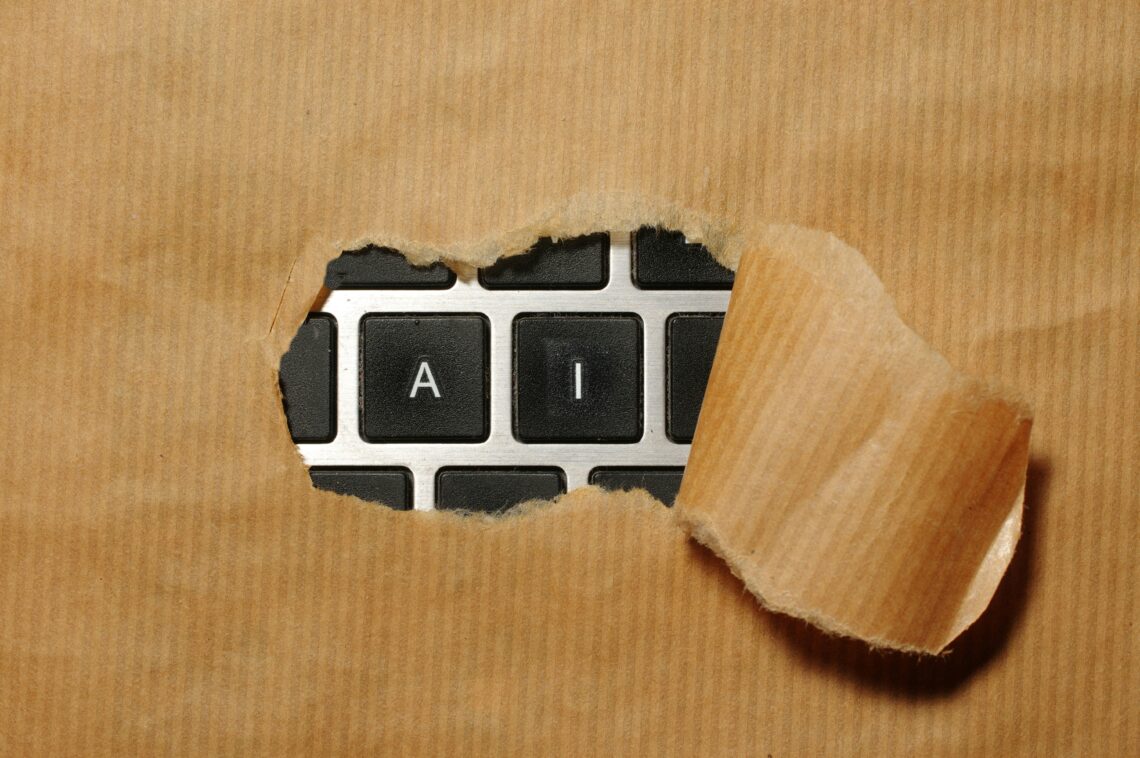
So there’s a certain joke in the fact that one of those minds now sits on my desk, marking up my sentences every morning before coffee. That’s what an AI editor is, when you’re honest about it. An intelligence in your writing process that doesn’t think the way you do.
And the question every writer is quietly asking is the one I used to build whole chapters around. How do I work with this thing without letting it replace the part of me that matters?
Fiction already taught me the answer.
The hardest job in science fiction is writing a mind that genuinely doesn’t think like the reader, and keeping the reader anyway. Get it wrong, and the character turns into a lecture, a cloud of clever ideas the reader can’t feel.
The trick is simple to say and miserable to do. You never let the strangeness float free. You bolt every alien thought onto something human. A stake. A loss. A body in a room that wants something it can’t have. The concept can be as big as you like, as long as a reader can stand next to a person who cares how it ends.
Abstraction loses people. Concrete detail keeps them. Hold that thought, because it’s about to do a second job.
An AI editor is that same kind of alien intelligence, only now it’s pointed at your own pages.
The temptation is to let it think for you. Hand over the whole thing, accept whatever comes back, tell yourself it reads fine.
The same discipline that saves the fiction saves you here too. Anchor it to your stakes, your voice, your judgment. Let AI work on the mechanical strangeness and guard the rest.
Here’s how that looks at the keyboard.
Hand over the chores. Copy and line editing is mostly mechanical, and there’s no romance in it. The verb that’s gone limp. The word you’ve used 4 times in a paragraph without noticing. The comma you’ve stared at for 10 minutes.
Here’s a practical workflow:
- Write the raw scene or chapter yourself. Messy, imperfect, fully human.
- Copy & line edit. Run it through AI (I use VSProse.com) for spelling, grammar, style, and sentence-level improvements. Review every suggestion side by side and accept or reject with 1 click.
- Proofread. Final pass for anything lingering before you move on.
- Read it aloud. Your own human check. If it doesn’t sound like you, the story isn’t done.
This tightens up both quality and speed without handing over a shred of authorship.
A tireless second reader who never gets bored is genuinely good at this, and it costs you nothing but the time to read AI’s suggestions.
Now the honest caveat. AI gets things wrong. Often. It’ll hand you grammar that’s confidently, beautifully incorrect, in the same calm voice it uses when it’s right. Or worse, correct but dull. So you have to be the one who knows the difference. AI proposes; you decide.
A writer who can’t tell good advice from fluent nonsense isn’t ready for the tool yet, and that’s fine, because telling the difference is a skill you already have.
Then guard the rest. Story, structure, character, the moment a chapter is done. That’s taste, and taste is the human part. It’s where a developmental editor earns every penny, and it’s the last thing you should hand to a machine that has never wanted anything in its life.
There’s a practical reason to be strict, on top of pride. AI has tells. Editors are already trained to spot them. There are little tics and tropes that give the game away.
Let the machine write, and you lose your voice. But when you use AI as an editor, it sharpens what’s already yours. Used as a ghostwriter, it stamps a badge of shame that the whole industry is learning to read.
This matters most to writers without much money. A real developmental edit can run into the thousands. Most independent authors simply can’t afford that. For a long time, the honest advice was grim: publish a weaker book, or don’t publish at all.
I think there’s a better answer.
Use the machine to clear the chore so the expensive human hours land where they’re worth the most. Spend your editor’s time on story and craft, the judgment no software can fake, and let the tool mop up the mechanical passes that used to eat the whole budget.
This is the entire philosophy in one line. Use every tool you can get your hands on to tell the best story you can. But if the story isn’t yours, what was the point of telling it?
The whole point of writing is refining your own thinking and putting something on the page that
only you could’ve created. When the words are genuinely yours, even if an AI helped sand them
down, the work carries an authenticity that readers can feel.
Which takes me back to the mind on my desk.
The non-human characters in my books moved people because of the human heart I kept beating under the strangeness. The want, the fear, the thing the character couldn’t say.
A machine can polish the prose around that heart until it shines.
It can’t supply the heart. It doesn’t want anything. It’s never lost anything. It has nothing it’s burning to tell you. That part is still your job, and your editor’s, and it always will be.
I write positive futures for a living, so here’s one.
The good version is already arriving.
The tools take the chore and hand us back the craft.
Writers spend their hours on the work that matters. Editors do the deep work they trained years for. Readers get better books. The soul stays exactly where it belongs, and the machine carries the boxes.
AI won’t replace writers and editors who care about their craft. It’ll just separate those who lean on it
as a crutch from those who wield it as a scalpel.
Guest Blogger Bio
Toby Weston is a British science fiction author, former software engineer, and founder of
Lobster Books. His Singularity’s Children series is available on Amazon and Audible. Find him
at tobyweston.net and on X @weston_toby.
A Final Word From Brit: If you’re thinking about using AI to help with your story, but you still want an editor’s perspective, I can help. Grab tips from our free Resource Library or explore my editing and coaching services to learn more about how I help authors go to market faster (and easier).
Professional services outside of your budget? Feel free to contact me to discuss cost-reduction options.
Interested in writing a GUEST POST? Learn more about submitting to us: https://bewrit.com/write-for-us/.

